

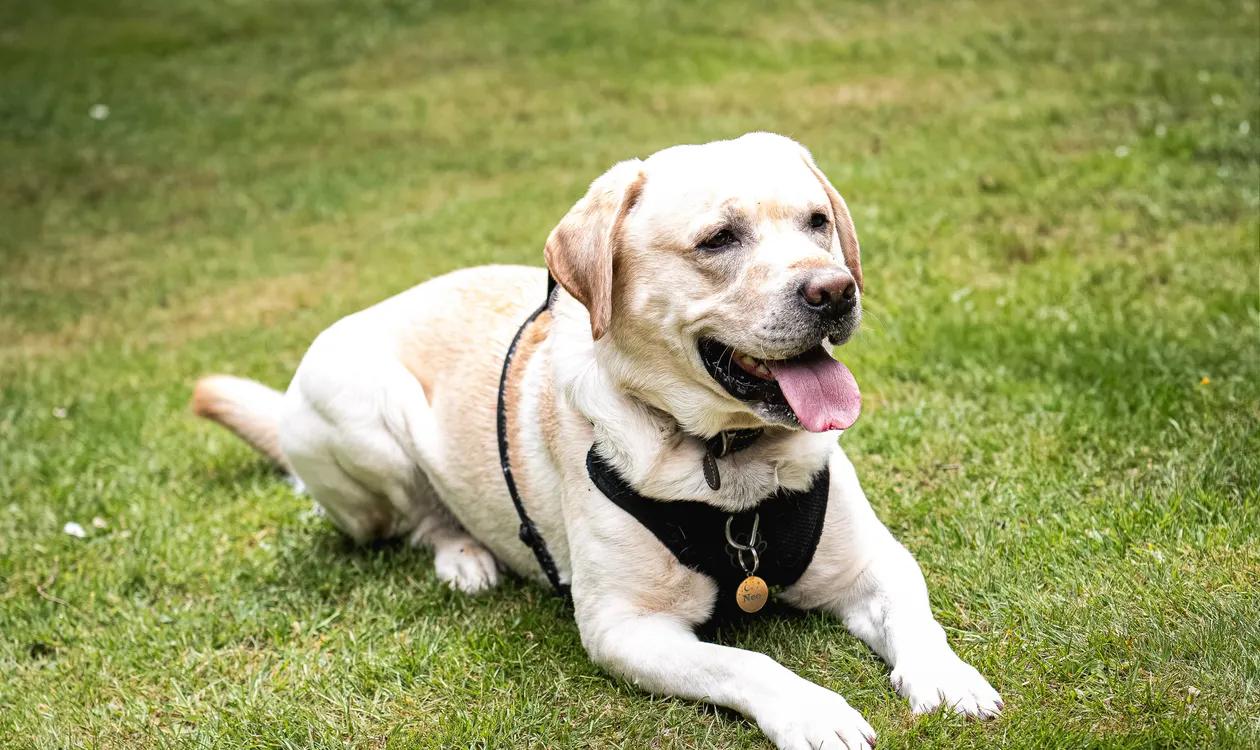
Around 45 percent of dogs seen by UK vets are overweight, and safe weight loss always starts with a vet check, not a home diet plan. Your vet can rule out medical causes, set a realistic target weight, and calculate the right calorie intake. Combined with portion control, gradual exercise and patience, most dogs can reach a healthier weight without crash dieting.
Is Your Dog Actually Overweight?
Feeding guides on packaging are calculated for a dog’s ideal weight, not necessarily their current weight, which is why so many owners underestimate the problem. A simple home check: you should be able to feel your dog’s ribs with light pressure, and see a visible waist when looking down from above. If ribs are hard to feel and the waist has disappeared, it’s worth a vet check to confirm.
Step 1: Get a Vet Check First
Before starting any weight loss plan, a vet visit rules out medical causes such as an underactive thyroid, and gives you a proper target weight and daily calorie goal based on your dog’s breed, age and body condition. Many UK practices also run free weight-loss clinics, which can provide ongoing support and accountability throughout the process.
Step 2: Feed for the Target Weight, Not the Current One
This is one of the most common mistakes owners make. Portion sizes should be calculated for your dog’s goal weight, not their current, heavier weight. Your vet or a weight-loss clinic can help you calculate this accurately, since guessing often leads to portions that are still too generous.
Step 3: Manage Treats and Table Scraps
- Swap high-calorie treats for low-calorie options such as small pieces of carrot or green beans
- Use a portion of your dog’s daily food allowance as training rewards, rather than adding extra treats on top
- Politely explain to family members and visitors why table scraps need to stop, since inconsistency here undoes progress quickly
- Try a clicker for reward-based training, which carries zero calories
Step 4: Increase Exercise Gradually
Sudden intense exercise can strain joints already under pressure from excess weight. Build up gradually, starting with shorter, more frequent walks, before increasing distance or adding gentle hill work. For significantly overweight or older dogs, swimming or hydrotherapy is a joint-friendly way to build fitness without the impact of walking on hard ground.
Step 5: Monitor Progress Consistently
- Weigh your dog every one to two weeks, ideally at your vet practice on the same scales for consistency
- Track body condition alongside weight, since muscle gain can offset fat loss on the scales
- Expect gradual, steady loss rather than a fast transformation, since crash dieting can be dangerous
Special Considerations by Breed and Age
Labradors and other Retrievers are particularly prone to weight gain due to a genetic tendency toward increased appetite. Senior dogs often need a gentler approach, balancing weight loss with maintaining muscle mass and joint comfort. Our senior dog care guide covers wider changes worth watching for as dogs age, including weight and mobility.
Why Crash Diets Are Dangerous
Never restrict a dog’s food drastically or suddenly. Rapid weight loss can be genuinely harmful and, in severe cases, lead to serious complications. Slow, steady, vet-guided weight loss is always the safer and more sustainable route.
Frequently Asked Questions
How much weight should my dog lose per week?
This varies by dog, but your vet will set a safe, gradual target as part of a weight loss plan, typically aiming for slow, steady loss over several months rather than a quick fix.
Are weight loss dog foods worth using?
Vet-recommended weight management foods are formulated to be lower in calories while keeping your dog feeling full, which can make sticking to the plan considerably easier than simply reducing regular food.
Can exercise alone help my dog lose weight?
Exercise supports weight loss but rarely works alone. Diet and portion control typically have the biggest impact, with exercise playing an important supporting role for overall fitness and joint health.
Key Takeaways
- Around 45 percent of UK dogs are overweight, increasing risk of diabetes, joint strain and heart issues
- Always start with a vet check to rule out medical causes and set a safe target
- Feed for target weight, not current weight, and manage treats carefully
- Build up exercise gradually to protect joints already under strain
About the Author: This guide was written by the K9 Assistance editorial team, who research UK-based pet care topics to help owners make confident, informed decisions.