

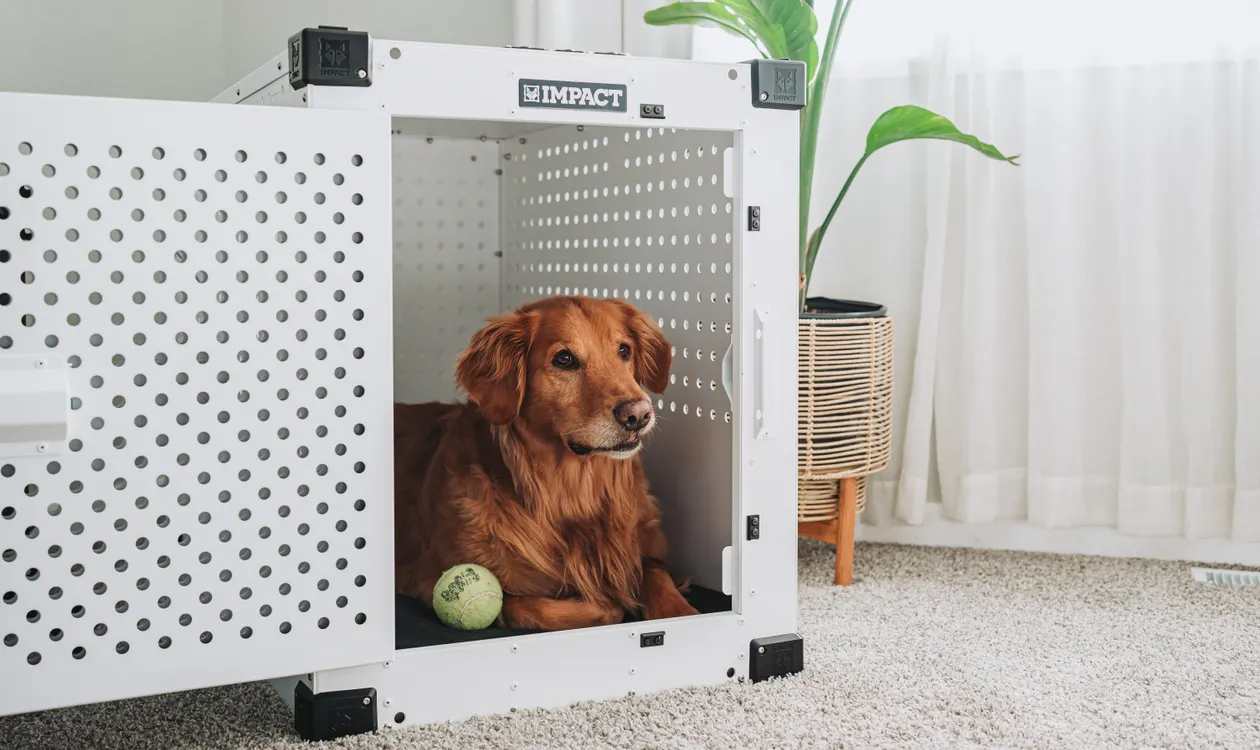
Crate training works by introducing the crate gradually and positively, so your puppy learns to see it as a safe den rather than a punishment. Done well, it speeds up toilet training, gives your puppy their own secure space, and keeps them safe when you can’t supervise. Most puppies take a few weeks to become fully comfortable, and rushing the process is the most common reason it goes wrong.
Choosing the Right Crate
Pick a crate that will fit your puppy’s adult size, using a divider to reduce the space while they’re small. A crate that’s too large can undermine toilet training, since puppies are less likely to soil an area close to where they sleep. Position it in a quiet, calm spot away from direct sunlight or draughts, and add comfortable bedding, a non-spill water bowl and a couple of safe toys.
Step-by-Step Crate Training
Step 1: Introduce the Crate Freely
Leave the door open and let your puppy explore in their own time. Never force or push a puppy inside. Scatter treats near the entrance, then gradually further inside, so entering the crate becomes their own choice and a positive experience.
Step 2: Feed Meals in the Crate
Once your puppy enters the crate comfortably, start feeding meals inside, initially with the door open. This builds a strong positive association between the crate and something genuinely enjoyable.
Step 3: Introduce Closing the Door Briefly
Close the door for a few seconds while your puppy eats or settles, then open it before they show any signs of distress. Gradually extend this time over several sessions, always staying nearby at first.
Step 4: Build Up Duration Gradually
Once your puppy is relaxed with the door closed for a few minutes, start stepping away briefly, returning before whining begins. Slowly increase both the duration and the distance you move away, always ending on a calm note.
Step 5: Practise Short Periods Alone at Home
Once your puppy manages several minutes calmly with you out of sight, begin leaving them crated for short periods while you’re elsewhere in the house, gradually building toward being able to leave the house briefly.
How Long Should a Puppy Be Crated?
| Age | Maximum Crate Time (Daytime) |
|---|---|
| 8 to 10 weeks | 30 to 60 minutes at a time |
| 3 to 4 months | 1 to 2 hours at a time |
| 4 to 6 months | 2 to 3 hours at a time |
| 6 months+ | Up to 4 hours, though regular breaks remain important |
These are general guides, not fixed rules. Puppies need regular toilet breaks, and a crate should never be used for extended confinement as standard practice, even once your puppy is older.
Common Mistakes to Avoid
- Using the crate as punishment — this quickly turns a safe space into somewhere your puppy actively fears
- Moving too fast — closing the door for long periods before your puppy is ready often causes setbacks
- Letting your puppy out while whining — this can accidentally reward the whining rather than calm behaviour, so wait for a brief pause before opening the door
- Skipping exercise beforehand — an under-exercised puppy will struggle to settle in any confined space
What If My Puppy Cries in the Crate?
Some initial mild fussing is normal, but genuine distress means you’ve moved too fast. Go back to an earlier step, spend longer building positive associations, and progress more slowly. If crying persists over several weeks despite a gradual approach, it may be linked to wider anxiety, and our dog separation anxiety guide covers overlapping signs worth knowing.
Crate Training and Toilet Training Together
Puppies naturally avoid soiling their sleeping area, which makes the crate a genuinely useful toilet training tool when used correctly. Always take your puppy outside immediately after crate time, as well as after eating, playing and waking, to reinforce the connection between outside and toileting. This routine pairs well with the wider habits covered in our positive dog training tips guide.
Frequently Asked Questions
Is it cruel to crate train a puppy?
Not when done correctly. A crate introduced gradually and positively becomes a genuine safe space many dogs choose to use throughout their lives, rather than a place of confinement or punishment.
How long does crate training take?
Most puppies become reasonably comfortable within a few weeks of consistent, gradual practice, though full comfort with longer periods alone can take a little longer.
Should I cover the crate with a blanket?
Partially covering a crate can help some nervous puppies feel more secure by creating a den-like feel, as long as airflow remains good and your puppy isn’t distressed by reduced visibility.
Can I crate train an older dog, not just a puppy?
Yes, the same gradual, positive approach works for adult dogs, though it may take a little longer if they have no prior positive association with confined spaces.
Key Takeaways
- Introduce the crate gradually and positively, never by force
- Feeding meals in the crate builds a strong positive association early on
- Follow age-appropriate time limits, and never use the crate as punishment
- Persistent distress needs a slower approach, not more time in the crate
About the Author: This guide was written by the K9 Assistance editorial team, who research UK-based pet care topics to help owners make confident, informed decisions.