

Around 40 percent of UK dogs show a fear response to fireworks, and preparation before the event works far better than trying to calm a dog once panic has already set in. A safe den, background noise, and a calm routine all help on the night itself, while gradual sound desensitisation over the weeks beforehand offers the strongest long-term improvement.
Signs Your Dog Is Anxious During Fireworks or Storms
- Whining, barking, growling or crying
- Clinginess, jumping up or staying unusually close to you
- Excessive panting or drooling
- Pacing, trembling or hiding
- Trying to escape, which can lead to dangerous bolting if outside unsupervised
Preparing Before Fireworks Season
UK fireworks displays aren’t limited to a single night. They typically run from the weekend before 5 November through to mid-November, with another spike around New Year’s Eve, so preparation should cover this wider window rather than just Bonfire Night itself.
Sound Desensitisation
Playing recordings of fireworks at a very low volume during calm, positive moments, and gradually increasing volume over several weeks, can genuinely reduce fear responses over time. This works best started well before the season begins, not in the days immediately before.
Build a Safe Den
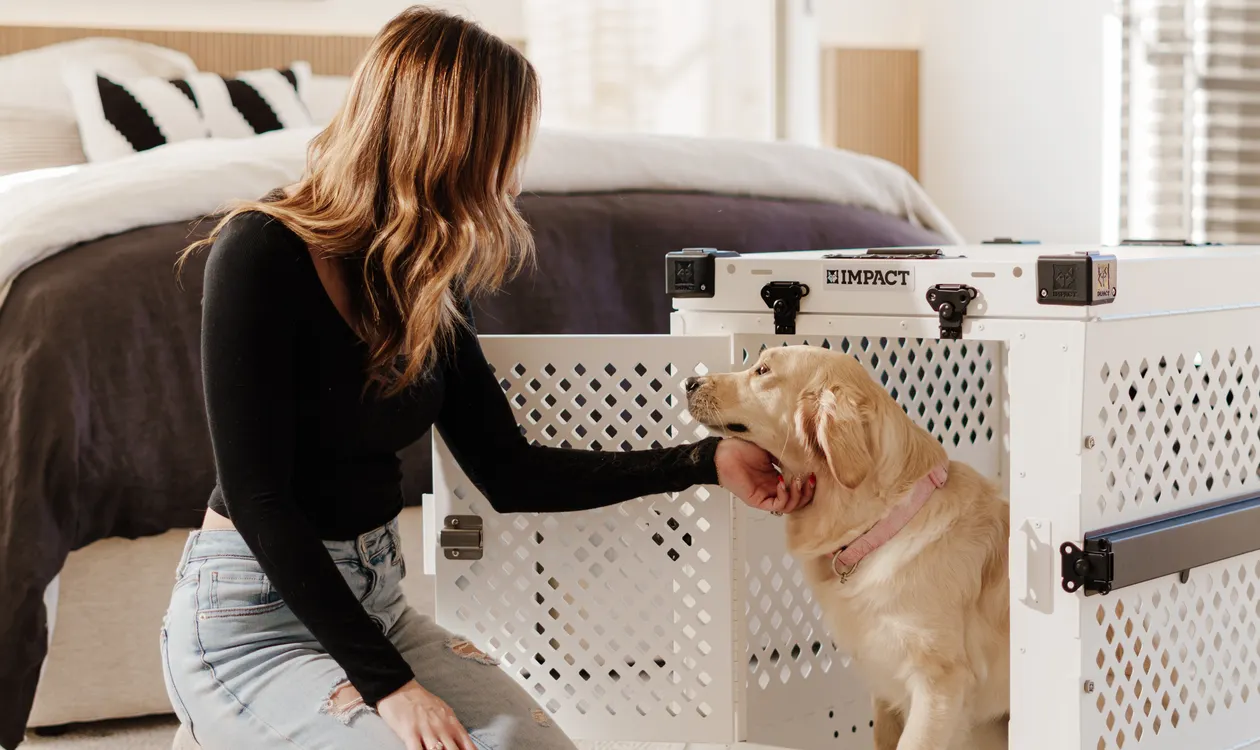
Set up a covered crate or a quiet corner with blankets, familiar bedding and toys, ideally in a room away from windows. Let your dog choose to use this space in advance, so it’s already familiar and positive by the time fireworks start, using the same gradual approach covered in our crate training guide if your dog isn’t already crate-comfortable.
What to Do on the Night
- Close windows and curtains — this reduces both noise and the startling flashes of light
- Use background sound — a TV, radio or white noise machine can help mask sudden bangs
- Feed an earlier meal — since fireworks often begin around sunset, an earlier dinner and toilet break avoids extra stress later
- Provide a stuffed chew toy — a familiar, rewarding distraction can help some dogs cope
- Stay calm yourself — dogs pick up on your mood, so acting normally sends a reassuring signal
- Always use a lead outside beforehand — unexpected early fireworks can startle a dog into bolting
What Not to Do
- Don’t punish fearful behaviour, which will only increase anxiety
- Don’t force your dog out of their safe space if they’ve chosen to hide there
- Don’t leave your dog alone during a display if you know they struggle with noise anxiety
When to Consider Extra Support
For dogs with significant fear, calming aids such as pheromone diffusers or anxiety wraps can help alongside the steps above. For more severe cases, speak to your vet before the season begins, since some anti-anxiety medications need to be given well in advance of an event to be effective, and a referral to a clinical behaviourist may be appropriate for long-term improvement.
Fireworks Anxiety in Dogs Who Also Struggle When Left Alone
Some dogs who are anxious during fireworks also show wider anxiety when left alone, since both stem from a similar stress response. If this sounds familiar, our dog separation anxiety guide covers a related, gradual desensitisation approach that can complement noise-specific training.
Frequently Asked Questions
Can fireworks anxiety in dogs be cured completely?
Many dogs improve significantly with consistent desensitisation training over time, though some remain sensitive to loud noises and continue to benefit from a calm routine and safe space each year.
Should I give my dog medication for fireworks anxiety?
This should only be done under veterinary guidance. Timing matters significantly, since most anti-anxiety medications need to be given well before the noise begins to be effective.
Is it true my dog can sense storms before I do?
Yes, many dogs detect changes in air pressure or distant thunder before humans notice anything, which is why anxiety can begin well before a storm is obviously audible.
Will getting a second dog help calm my anxious dog during fireworks?
Not reliably. Fear responses are individual, and a calm companion dog doesn’t consistently transfer confidence to an anxious one. Targeted training and preparation remain more effective.
Key Takeaways
- Around 40 percent of UK dogs show fear during fireworks, and preparation beats last-minute reaction
- Sound desensitisation started weeks in advance offers the strongest long-term improvement
- A safe den, background noise and a calm routine all help on the night itself
- Speak to your vet in advance if your dog’s fear is severe, since some support needs early timing
About the Author: This guide was written by the K9 Assistance editorial team, who research UK-based pet care topics to help owners make confident, informed decisions.