

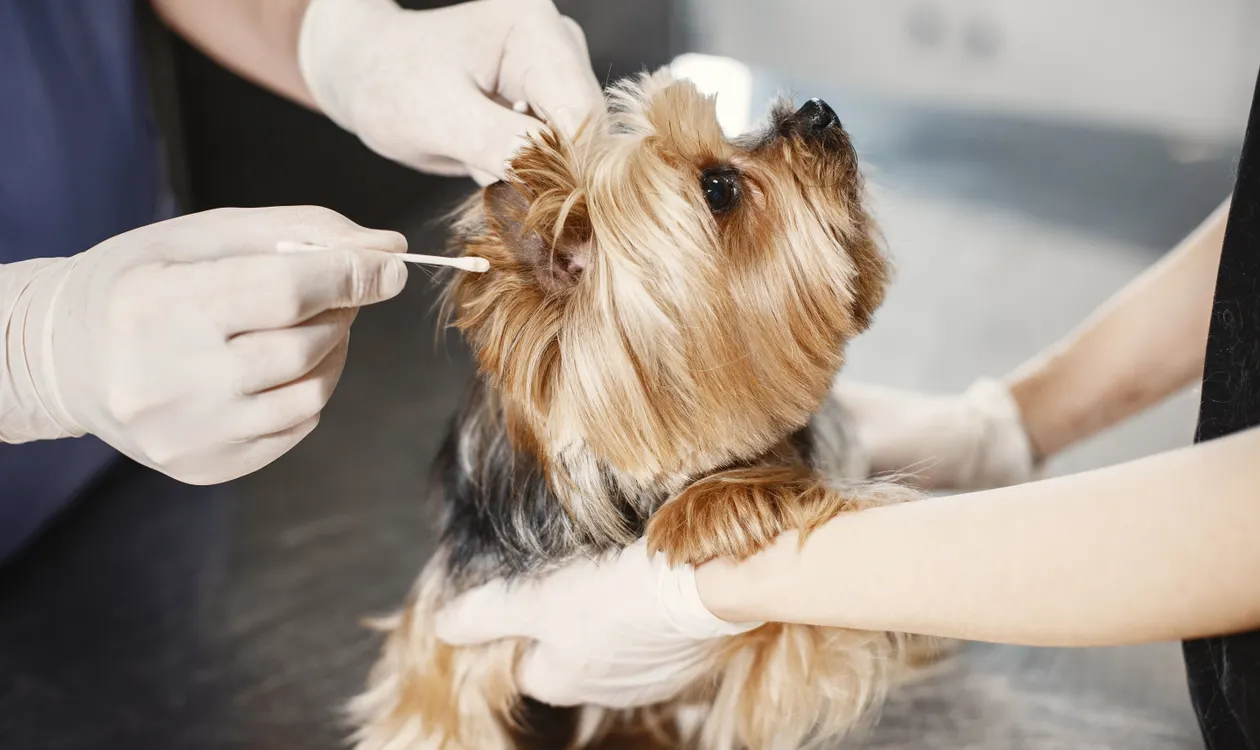
Why So Many UK Dogs Itch
If your dog scratches through the night, chews its paws raw or keeps getting ear infections, an allergy is one of the most likely causes. Vets in the UK see allergic skin disease every day. It needs a clear diagnosis, a plan that fits your dog, and steady home care.
Most allergic dogs can live comfortably once the trigger is found. This guide covers the four main allergy types, the symptoms, how a vet finds the cause, UK treatment costs, and the home routine that helps most.
What a Dog Allergy Actually Is
An allergy happens when the immune system overreacts to something harmless, such as pollen, a food protein or flea saliva. In people, hay fever usually affects the nose and eyes. In dogs, the skin takes most of the damage, so the main sign is itching, not sneezing.
The medical name for the most common form is atopic dermatitis. The skin barrier weakens, moisture escapes, and bacteria and yeast get in more easily, so an allergic dog often has sore skin and a secondary infection at the same time. Treating only the infection, without tackling the allergy underneath, is why the problem keeps coming back.
The Four Main Types of Dog Allergy
Most cases fall into four groups, and many dogs have more than one at the same time.
| Type | Common triggers | Typical pattern |
|---|---|---|
| Environmental | Pollen, dust mites, mould | Itchy paws, belly, ears; worse in spring and summer |
| Food | Beef, dairy, chicken, wheat | Year round itching, sore ears, upset stomach |
| Flea allergy | Flea saliva from one bite | Intense itching over lower back and tail base |
| Contact | Cleaning products, plants, collars | Redness where skin touches the trigger |
Grass pollen is the biggest environmental trigger in the UK, with the season running from May to August and peaking in June and July. Tree pollen comes earlier, from March to May, while dust mites and moulds matter all year. Food allergy affects only a minority of allergic dogs, but it is easy to miss. Beef is the most frequently identified trigger in the UK, ahead of dairy, chicken and wheat, so suspect food when symptoms last all year or ear infections keep returning. A dog with flea allergy needs no visible fleas: one bite can set off days of itching, which is why vets insist on strict flea prevention even for dogs that never seem to have fleas.
Symptoms to Watch For
Look for the pattern, not a single symptom. Check the skin for pink or red patches, especially on the paws, belly, groin, armpits and inside the ears. Dogs lick and chew their paws until the fur turns brown from saliva staining. You may also see spots, scabs, hair loss or hot spots: raw, moist areas that get worse if the dog keeps licking them.
Allergic dogs get ear infections again and again: head shaking, ear scratching, redness inside the ear flap and a dark or smelly discharge. More than two in a year puts allergy near the top of the list. Our guide to recurring ear infections in dogs explains what vets check.
Food allergy often brings vomiting and loose stools alongside the itch. These signs alone do not prove a food allergy, but they strengthen the case for a food trial. If scratching interrupts sleep, book a vet visit. Breeds seen with atopy more often include West Highland White Terriers, Boxers, Labradors, French Bulldogs and Cocker Spaniels, so act sooner if one of these starts itching.
How Your Vet Finds the Cause
There is no single blood test that gives a reliable answer for every allergy. A good vet works through the causes in order, ruling out the simple ones first.
First, fleas and parasites are ruled out, and flea control is tightened up, because a flea allergy can mimic every other type. Second, skin scrapes check for infection. An allergy plan will not work well while an infection is still active.
Third comes the food trial, the only reliable way to diagnose food allergy. Blood and saliva tests sold for pet food allergy are not scientifically validated. The trial means feeding one novel protein your dog has never eaten, such as venison or rabbit, or a prescription hydrolysed diet. It must be strict for at least 8 weeks, with no treats, chews or table scraps unless your vet approves them. Research shows an 8 week trial picks up more than 90 per cent of food allergic dogs, and if symptoms return when the old food is fed again, the diagnosis is confirmed.
Fourth, allergy testing looks for environmental triggers. Blood or skin testing can identify specific pollens, dust mites or moulds, and this matters most when immunotherapy is planned, because the treatment is built around your dog’s own results.
Treatment Options and UK Costs
Allergies are managed rather than cured. The aim is a dog that itches little and sleeps well, even if flare ups still happen. Most dogs need more than one approach at once.
| Treatment | What it does | Typical UK cost |
|---|---|---|
| Apoquel | Daily tablet, calms itch within 4 to 24 hours | About £60 to £120 a month |
| Cytopoint | Monthly injection blocking the itch signal IL-31 | About £50 to £100 per injection, lasting 4 to 8 weeks |
| Immunotherapy | Personalised drops or injections that desensitise the immune system | Several hundred pounds; judged over 6 to 12 months |
| Medicated shampoo | Soothes skin and treats surface infection | £10 to £25 a bottle |
Apoquel is prescription only, licensed for dogs over 12 months old. It works quickly, but it needs blood monitoring on long term use. Cytopoint suits owners who prefer no daily tablet, as it targets one itch pathway instead of suppressing the immune system broadly. Neither drug removes the trigger, so stopping treatment usually brings the itch back.
Immunotherapy is the closest thing to a long term answer: about two thirds of dogs improve, but treatment often runs for 3 to 5 years. Ask your vet for a written prescription if you buy medicine regularly, as a registered online pharmacy is often 20 to 40 per cent cheaper than the clinic dispensary. Never give your dog human antihistamines or creams without vet advice.
Home Care That Actually Helps
Medicine does half the job. The daily routine does the other half, and it costs far less than another vet visit. Rinse paws and belly with plain water after walks, especially in pollen season, as pollen settles between the toes. Dry the paws well afterwards, because damp skin between the toes invites yeast.
Bathe with a vet recommended shampoo, usually once a week during a flare up and less often once things settle. Read our guide on how often to bathe a dog before you increase bathing, because over washing can dry the skin out. Wash bedding weekly at 60 degrees and hoover often. Dust mites live in bedding and carpets, so this simple step cuts a year round trigger.
Keep flea control going all year, not just in summer: about 90 per cent of the flea life cycle happens in the home. Walk smart in pollen season by going out after heavy rain, when pollen counts drop. If your vet has set a trial diet, feed it properly. One dental stick or one scrap from a plate can undo weeks of work. Keep a short diary too: date, itch level from 1 to 10, and where you walked.
Mistakes That Make Allergies Worse
The most common mistake is stopping treatment the day the dog looks better. Allergy drugs control symptoms, they do not cure the cause, so the itch returns within days. Follow your vet’s plan, even when the skin looks clear.
Another mistake is changing foods every few days. A new food needs weeks to show a result, and switching constantly means you never learn which food helped or harmed. Change one thing at a time and record what happened. Do not blame the food before fleas and infection are ruled out.
When to See a Vet Urgently
Book a routine vet visit if your dog scratches constantly, has red or broken skin, loses hair, or keeps getting ear or skin infections. Book sooner if the itch stops your dog sleeping. Seek emergency care straight away if your dog’s face swells or breathing becomes difficult. That can signal anaphylaxis, a severe allergic reaction that needs treatment within minutes.
Frequently Asked Questions
Can dog allergies be cured?
No, but they can be managed well. The trigger is avoided where possible, and medicine controls the itch. Many dogs go months with few symptoms on the right plan.
Are allergy tests worth the money?
They are worth it when immunotherapy is planned, because the treatment is made from the results. For food allergy, a diet trial is more reliable than any blood test.
A Simple Plan to Start This Week
Start with a vet visit, not a new food or a supplement. Ask the vet to check for fleas, skin infection and ear disease first, then agree whether a food trial is the next step. While you wait, rinse paws after walks, keep flea control up to date, and keep a short itch diary. Get the routine and the follow up visits right, and most dogs spend far more of the year comfortable than itchy.
Related reading
Dog training tips that will save you grief and time
How to stop a dog pulling on the lead