

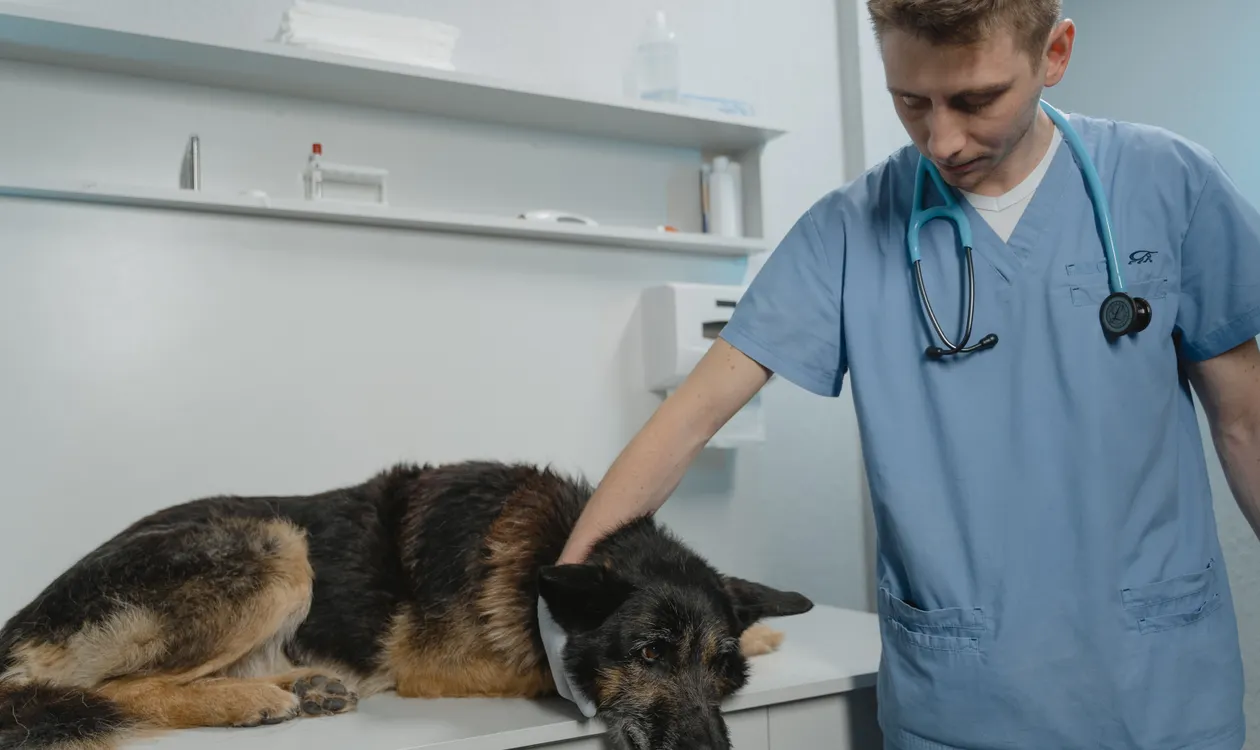
Why is my dog being sick?
Most dogs are sick at some point, and it usually passes quickly. A dog that raids the bin or eats something odd on a walk will often vomit once or twice and then be fine. But vomiting is a symptom, not a diagnosis, and it can also be the first sign of poisoning, a blockage or a serious illness.
Start by working out whether your dog is actually vomiting or regurgitating. Vomiting is active: the belly heaves and the dog retches. Regurgitation is passive: food slides back up with no heaving, usually soon after eating. Tell your vet which one you saw; a short phone video helps more than a description.
A healthy adult dog that has been sick once and still seems bright can usually be watched at home. A dog that keeps being sick, brings up blood, cannot keep water down or seems flat and painful needs a vet.
The common causes of vomiting in dogs
Eating something they should not have. This is by far the most common cause. Dogs scavenge from bins, steal leftovers, eat eating grass and pick up goodness knows what on walks. Rich or fatty food, a sudden change of diet, or eating far too fast can all upset the stomach.
Infections and parasites. Gastroenteritis, the inflammation of the stomach and gut, is usually caused by bacteria such as Campylobacter, a virus such as parvovirus, or parasites such as worms and Giardia. Parvovirus is the one to fear in unvaccinated puppies: it causes severe vomiting and bloody diarrhoea and can kill quickly. Keeping your dog’s vaccination schedule up to date is the best protection.
Swallowed objects. Socks, toys, stones, corn cobs and string are classic blockages. Teething puppies chew and swallow things they find, which is why puppies need close watching. A blockage causes repeated vomiting and is an emergency.
Poisoning. Chocolate, grapes and raisins, onions and garlic, xylitol in some sugar-free gum and peanut butter, rat poison, antifreeze and human medicines are all poisonous to dogs. If your dog has eaten any of these, do not wait for symptoms. Phone your vet or Animal PoisonLine on 01202 509 000, a 24-hour service run by the Veterinary Poisons Information Service. It costs £35 per call from 8am to 8pm Monday to Friday and £45 at other times. Never try to make your dog vomit unless a vet specifically tells you to.
Motion sickness and other illnesses. Some dogs, puppies in particular, are sick on car journeys, though it often improves with age. Pancreatitis, kidney or liver disease, a womb infection called pyometra in unspayed females, and some cancers can also cause repeated vomiting. Vomiting that goes on for more than a day, or keeps coming back over weeks, needs proper investigation rather than another bland meal.
What the colour of your dog’s vomit tells you
The PDSA, the UK veterinary charity, publishes a vomit colour guide. Colour alone never gives a diagnosis, but some colours mean phoning the vet straight away.
Yellow or green foam. This is usually bile, the digestive fluid from the small intestine. A small amount of yellow foam, often first thing in the morning, usually means your dog vomited on an empty stomach. If it keeps happening, ask your vet about a small late-night snack.
White foam. White froth can come from acid reflux or an empty stomach. A dog that keeps retching up only foam needs a vet the same day.
Clear liquid. Clear vomit is usually water or saliva, often after drinking too fast following exercise. If your dog cannot keep water down at all, that is a red flag.
Undigested food. Food that comes back up looking much as it went in usually points to eating too fast or too much. A slow feeder bowl often fixes it.
Red blood. Fresh blood, bright red in the vomit, means you should contact your vet immediately.
Coffee grounds. Vomit like dark brown coffee grounds is partly digested blood. Contact your vet immediately.
Lots of green liquid. A large amount of green fluid can be a symptom of a gut blockage. Contact your vet immediately.
Brown or foul smelling. Dark brown vomit that smells like faeces can also point to a blockage. Do not wait.
Take a photo of the vomit before you clean it up: it gives the vet something concrete to work from.
When to call the vet straight away
Phone your vet now, or the out-of-hours number if the practice is closed, if you see any of these:
Retching or trying to be sick with nothing coming up, especially with a swollen or tight belly. This can be bloat, also called gastric dilatation-volvulus or GDV, where the stomach fills with gas and twists. It is life-threatening and needs emergency surgery.
Blood in the vomit, red or like coffee grounds.
Vomiting again and again over a few hours, or regularly for more than eight hours.
Your dog cannot keep water down.
Vomiting with bloody diarrhoea, or severe diarrhoea at the same time.
A painful, swollen or hard belly, or your dog crying or hunched up.
Collapse, pale gums, trouble breathing, disorientation or a seizure.
You know or think your dog has eaten something poisonous or swallowed an object.
Your dog is a puppy, elderly or has an existing condition such as diabetes or kidney disease. Young and old dogs dehydrate far faster. Our guide to caring for a senior dog covers the extra caution older dogs need.
Call the same day if vomiting lasts more than 24 hours, your dog is off food and water, or the episodes keep returning over several days. If you are worried, phone. You do not need to work out the diagnosis first.
What to do at home: the first 24 hours
If your otherwise healthy adult dog has been sick once or twice and still seems bright, try these steps at home.
1. Note what happened. Write down when your dog was sick, how many times, what the vomit looked like and what your dog ate in the last 24 hours. Your vet will ask for exactly this if you end up phoning.
2. Rest the stomach. Vets Now advises removing food and water for two hours after the last episode of vomiting. Then offer small sips of water, little and often, rather than a full bowl at once.
3. Offer a small bland meal. Once six to eight hours have passed without vomiting, offer a small bland meal: plain boiled chicken breast with no skin or seasoning, mixed with a little plain white rice. Feed about a quarter of a normal portion every few hours.
4. Keep your dog calm. Short lead walks for toilet breaks only, no running and no long walks for a day.
5. Go back to normal food slowly. If your dog keeps the bland food down for 24 hours, mix the usual food back in gradually over two to three days.
6. Do not give human medicines. Never give paracetamol, ibuprofen, Imodium or Pepto-Bismol unless your vet prescribes them. They can harm dogs and hide a more serious problem. Do not give milk either, and do not force food or water into your dog’s mouth.
If your dog is sick again during the bland diet stage, go back to step two and phone your vet if it continues. Most mild cases settle within one to two days, but get advice if your dog is not back to normal in 48 hours.
What the vet will do and what it costs in the UK in 2026
At the appointment the vet will ask what your dog ate, check for dehydration, feel the belly and take the temperature. The skin tent test is a quick check: lift the skin on the back of the neck and let go. In a well hydrated dog it snaps straight back.
Depending on what they find, the vet may suggest a stool test, a test for parvovirus or Giardia, blood tests, an X-ray for a swallowed object, or an ultrasound. Treatment for a mild case is usually an anti-sickness injection, an antacid and a probiotic paste. Severe cases need intravenous fluids, and a blockage or bloat needs surgery.
Costs vary by practice and region, with London usually the most expensive. A January 2026 ManyPets survey of 80 UK veterinary practices put the average first daytime consultation at £61.99. Out-of-hours care costs far more: a separate ManyPets survey of 49 emergency vets in January 2026 found the average out-of-hours consultation was £275.72, before any treatment. Tests, medicines and fluids are charged on top, so ask for an estimate before treatment starts.
How to stop it happening again
Most vomiting in dogs is preventable.
Change food gradually over about seven days instead of switching bowls overnight. Keep bins shut and never leave food, chocolate or medicines where a dog can reach them. Never give cooked bones, as they splinter. Check sugar-free gum and peanut butter labels for xylitol.
Feed fast eaters from a slow feeder bowl or a snuffle mat, and split one big meal into two smaller ones. Pick up your dog’s poo promptly and keep worming up to date, since worms and Giardia spread through faeces. Keep vaccinations current, especially for puppies, and supervise puppies around small objects they can chew and swallow. Know your dog’s normal appetite and energy, so you spot a change early. With vomiting, early is usually cheaper and safer.
Related reading
Dog training tips that will save you grief and time
How to stop a dog pulling on the lead