

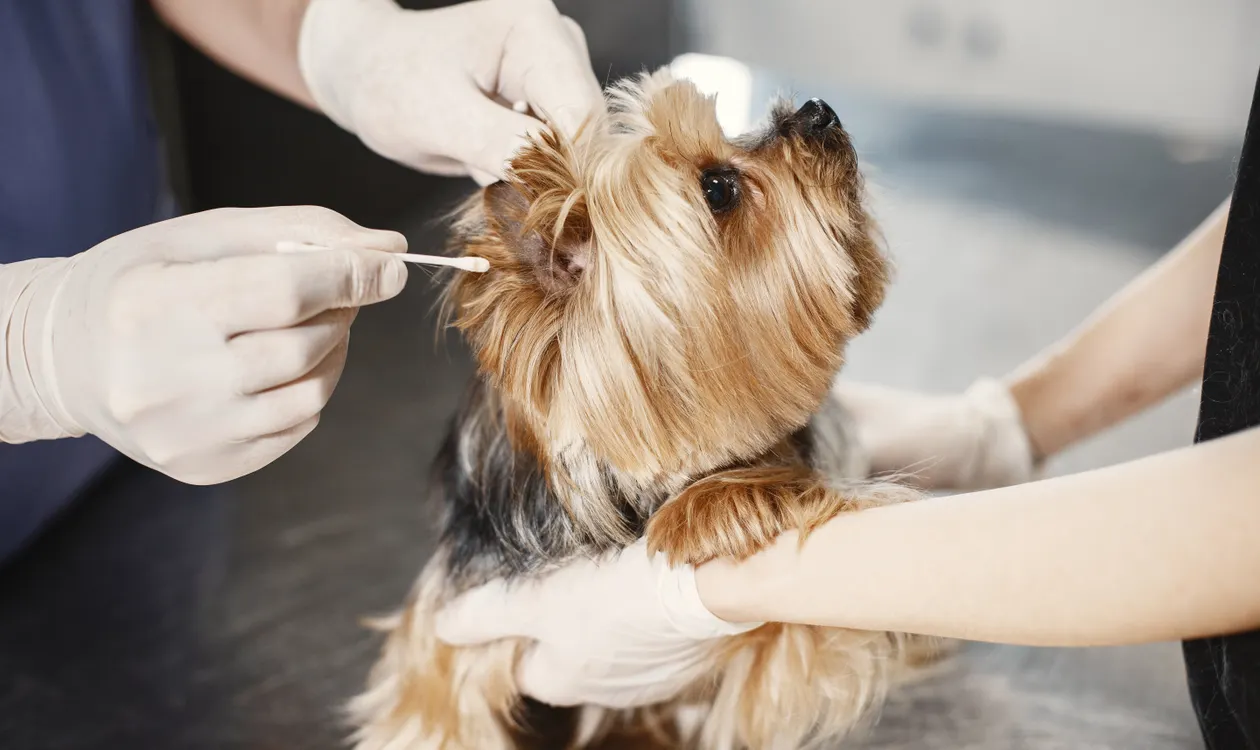
Dog ear infections are one of the most common reasons for a vet visit, and the key symptoms are head shaking, scratching at the ear, an unpleasant smell, and redness or discharge inside the ear. They should never be treated at home without a vet diagnosis, since the underlying cause (bacteria, yeast, parasites or allergies) determines the correct treatment, and using the wrong product can make things worse.
Signs of an Ear Infection in Dogs
- Frequent head shaking or tilting
- Scratching or pawing at the ear
- A noticeable, often unpleasant smell from the ear
- Redness, swelling or heat inside the ear flap
- Dark or yellowish discharge
- Rubbing the ear along furniture or the floor
- Sensitivity or pain when the ear area is touched
If you notice loss of balance, unusual eye movements, or a head tilt that does not resolve, this can indicate a middle or inner ear infection and needs a same-day vet appointment.
What Causes Ear Infections in Dogs?
| Cause | Typical Signs | Notes |
|---|---|---|
| Bacterial infection | Yellow or green discharge, strong odour | Often secondary to another underlying cause |
| Yeast infection | Dark, waxy discharge, musty smell | Linked to moisture and allergies |
| Ear mites | Dark, crumbly discharge, intense itching | More common in puppies |
| Allergies (food or environmental) | Recurring infections, itchy skin elsewhere too | Underlying allergy needs addressing to prevent repeat infections |
| Foreign object (e.g. grass seed) | Sudden onset, one-sided, intense discomfort | Common after walks through long grass in summer |
Which Dogs Are Most at Risk?
Dogs with floppy ears, such as Spaniels and Basset Hounds, are more prone to infections because airflow to the ear canal is reduced, creating a warm, moist environment where bacteria and yeast thrive. Dogs that swim regularly, and those with known allergies, are also at higher risk.
How Vets Diagnose Ear Infections
Your vet will examine the ear canal using an otoscope to check for foreign objects, growths, or a ruptured eardrum, and will usually take a swab to examine under a microscope. This identifies whether the cause is bacterial, yeast-based, parasitic or a combination, which directly determines the right treatment. This is also why home treatment without a diagnosis is discouraged, since the wrong product can allow the underlying cause to worsen.
Treatment Options
- Ear cleaning — your vet may clean debris and wax before treatment, or show you how to safely clean at home with a proper pH-neutral solution
- Medicated ear drops — combining antibacterial, antifungal or anti-inflammatory ingredients depending on the cause
- Oral antibiotics — for more severe or spreading infections
- Antiparasitic treatment — specifically for ear mites
- Pain relief — for dogs in significant discomfort
It is important to complete the full course of any prescribed treatment, even if your dog’s ears look better after a few days, since stopping early is a common reason infections return.
Preventing Future Ear Infections
- Dry your dog’s ears thoroughly after swimming or bathing
- Check ears regularly as part of your normal grooming routine, especially for floppy-eared breeds
- Use a vet-recommended ear cleaner periodically if your dog is prone to infections, rather than water alone
- Address any underlying allergies with your vet’s guidance, since recurring infections are often allergy-driven
- Avoid inserting cotton buds or anything else deep into the ear canal, which can cause damage or push debris further in
Building Ear Checks Into Grooming
Regular ear checks are easiest to keep up with when they become part of a normal grooming routine rather than a separate task. If you bathe your dog regularly, our guide on how often to bathe a dog is a good companion, since thorough drying after a bath is one of the simplest ways to prevent ear infections in the first place.
Recurring ear infections are also often linked to food or environmental allergies, so if this sounds familiar, our diet and health tips guide is a useful next read.
When to See a Vet
Book an appointment as soon as you notice signs of discomfort, since ear infections are painful and rarely resolve without treatment. Seek same-day care if your dog shows a head tilt, loss of balance, or appears to be in severe pain, as these can indicate a more serious middle or inner ear infection.
Frequently Asked Questions
Can I treat my dog’s ear infection at home without a vet?
This is not recommended. Without knowing whether the cause is bacterial, fungal or parasitic, the wrong treatment can allow the infection to worsen or spread.
Why does my dog keep getting ear infections?
Recurring infections are often linked to an underlying allergy, ear shape, or a chronic moisture issue. Your vet may investigate further after repeated episodes rather than just treating each one individually.
Are certain dog breeds more prone to ear infections?
Yes, breeds with floppy ears or narrow ear canals, such as Cocker Spaniels and Basset Hounds, are at higher risk due to reduced airflow in the ear canal.
How long does it take for a dog ear infection to clear up?
With appropriate treatment, mild infections often improve within one to two weeks, though the full prescribed course should always be completed to prevent recurrence.
Key Takeaways
- Head shaking, scratching, odour and discharge are the main signs of an ear infection
- A vet diagnosis is essential, since treatment depends on the underlying cause
- Floppy-eared and allergy-prone dogs are at higher risk
- Drying ears after swimming and regular checks help prevent future infections
About the Author: This guide was written by the K9 Assistance editorial team, who research UK-based pet care topics to help owners make confident, informed decisions.