

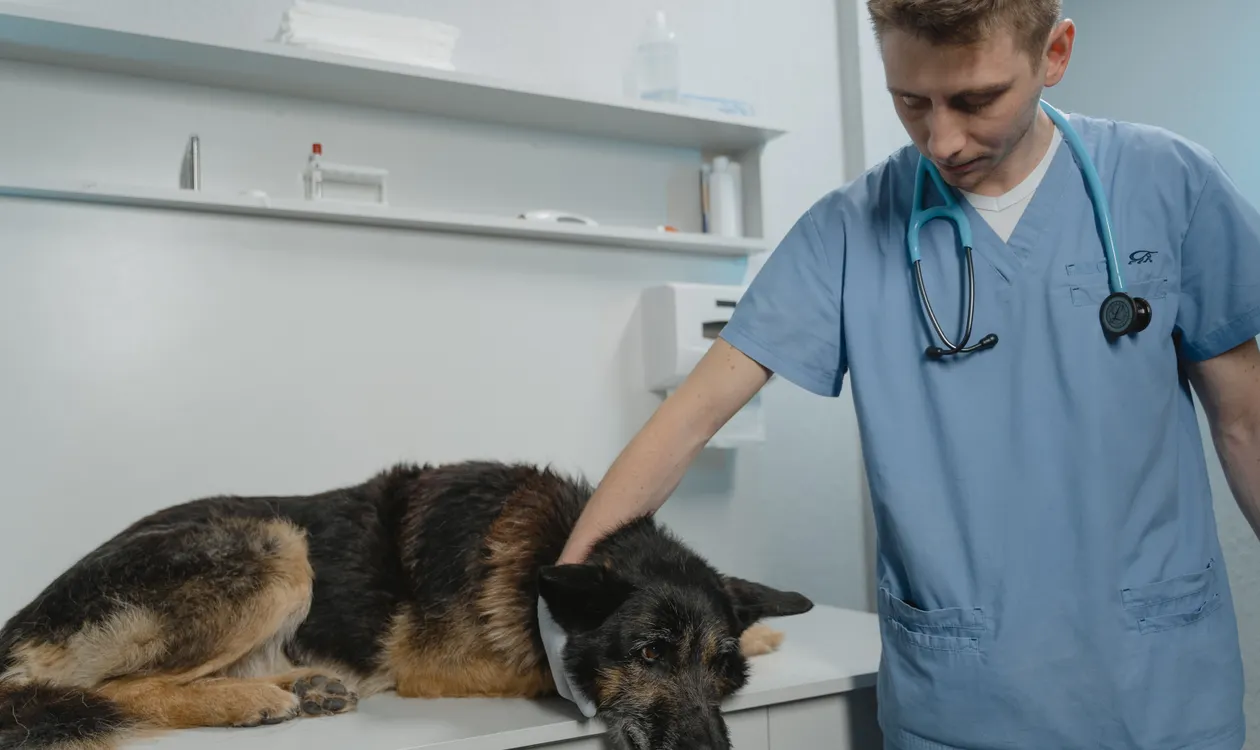
You let the dog out first thing in the morning and the back garden tells you everything. Loose stools, maybe several in a row, and a dog that looks a little sorry for itself. Diarrhoea is one of the most common reasons UK owners ring their vet, and research quoted by Animal Friends suggests around 1 in 12 dogs in the UK is diagnosed with acute diarrhoea each year. Most cases are mild and settle within a couple of days.
What counts as diarrhoea
A single soft stool after a change of routine is not diarrhoea. Diarrhoea means frequent, loose or watery stools, passed more often than normal and with more urgency. Your dog may ask to go out in the middle of the night, strain, or pass mucus along with the stool.
Vets usually split it into two types. Acute diarrhoea starts suddenly and lasts a few days at most. Chronic diarrhoea lasts more than three weeks, or keeps coming back every few days. Acute cases often settle at home; chronic cases need a vet to find the cause.
The most common causes in UK dogs
Most bouts have a simple explanation. A recent VetCompass study by the Royal Veterinary College found the most common triggers were scavenging, sudden diet changes, reactions to medication and colitis.
Something they ate. This is the number one cause. Bin raiding, a dropped takeaway, barbecue scraps, or a chew that was too rich.
A sudden food change. Switching kibble overnight, even to a better brand, upsets the gut bacteria that digest food. Change food over at least four days, and ten days for a sensitive dog.
Stress. Moving house, kennelling, fireworks, a new baby, or a change in routine can all loosen a dog’s stools, but stress diarrhoea usually clears within a day or two once the dog settles.
Parasites. Roundworms, hookworms and giardia are common in UK dogs, and puppies are the most vulnerable. A dog that keeps getting diarrhoea after worming may need a faecal test rather than another dose of the same product.
Infection. Bacterial infections such as salmonella and campylobacter, and viruses such as parvovirus, can all cause diarrhoea. Parvovirus is the serious one: it hits unvaccinated puppies hardest and causes severe, bloody diarrhoea with vomiting. Keeping vaccinations up to date is the best protection, and our dog vaccination schedule UK guide sets out exactly which jabs your dog needs and when.
Food intolerance or allergy. Some dogs react to a specific protein, often chicken or beef, or to wheat and dairy. If the diarrhoea keeps returning after every apparent recovery, an ingredient is a likely culprit. Our guide to dog allergies, symptoms and treatment explains how vets test for this and how an elimination diet works.
Medication and more serious causes. Anti-inflammatory painkillers (NSAIDs) are a well documented trigger, so tell your vet if diarrhoea starts within a day or two of a new medicine. Pancreatitis, liver or kidney disease, inflammatory bowel disease and swallowed objects cause diarrhoea too.
What to do tonight: your first 24 hours
If your dog is an adult, bright in itself, drinking normally and the diarrhoea is the only symptom, you can usually manage the first day at home.
Keep water down, always. Diarrhoea drains fluid fast. Keep the bowl full and check it every couple of hours. If your dog will not drink plain water, try a little low-sodium broth. Never add salt.
Skip a meal or two. Withhold food for 12 to 24 hours so the gut can rest. This applies to healthy adult dogs only. Do not fast a puppy under six months, a senior dog, a toy breed, or any dog with an existing health condition. If in doubt, skip the fast and call your vet.
Restart small and plain. When the fast ends, offer three or four small meals a day instead of one or two big ones. The classic bland meal is boiled skinless chicken breast with plain white rice, in roughly equal parts. Build back to normal food over two or three days.
Cut everything else out. No treats, no chews, no dental sticks, no table scraps until the stool has been firm for at least 24 hours. Rich chews are one of the most common triggers in the first place, so they are the first thing to go.
If the diarrhoea has not improved within 24 hours, or your dog seems worse at any point, call your vet.
The bland diet, with amounts that work
Chicken and rice is repeated everywhere, but the amounts matter. Too much food too soon restarts the problem. For a small dog under 10 kg, offer about 100 to 150 grams of the cooked mix per meal, three to four times a day. For a medium dog of 10 to 25 kg, aim for 200 to 300 grams per meal. For a large dog over 25 kg, 350 to 450 grams per meal is a reasonable start. If the stool is improving, increase the portion slightly at the next meal. If it loosens again, drop back a step.
Keep the bland diet going for three to five days after the stool firms up, then transition back to normal food over four days: one quarter normal food on day one, half on day two, three quarters on day three, and fully back on day four. Sensitive dogs need ten days. Rushing this step is how most owners end up back at square one.
What your dog’s stool is telling you
Stool colour gives useful clues, though it never diagnoses anything on its own. Brown and soft but formed is normal, or close to it. Yellow or orange stool often points to something eaten, a food intolerance, or a liver or bile duct issue if it persists. Green stool usually means food passed through the gut too quickly, or the dog ate a lot of grass. Our guide on why dogs eat grass covers when grass eating is harmless and when it signals a problem. Grey and greasy stool can suggest a pancreas problem, especially if the dog is losing weight. Red streaks mean fresh blood from the lower gut, often colitis, and need a vet call the same day. Black, tarry stool is digested blood from higher up the gut and is always taken seriously, whatever the consistency.
Warning signs: call the vet now
Most mild cases settle in one to three days. Stop home treatment and call your vet the same day, including at the weekend, if you see any of these: blood in the stool or black tarry stools; diarrhoea lasting more than 48 hours in an adult dog, or more than 24 hours in a puppy; vomiting alongside the diarrhoea; refusal to drink, or signs of dehydration such as dry gums, sunken eyes, or skin that does not spring back when gently pinched; lethargy, weakness, collapse, or a bloated and painful abdomen; or your dog is a puppy, elderly, or has an existing health condition.
Diarrhoea with vomiting is a different problem from diarrhoea alone. Vomiting adds dehydration and can signal a blockage or something more serious. If your dog is vomiting too, read our guide on dog vomiting, causes and what the colour means and call your vet sooner rather than later.
What the vet will do, and what it costs
A standard vet consultation in the UK usually costs between £40 and £60, though prices vary by area and practice. The vet will examine your dog, ask about diet, recent walks, medication and vaccination history, and may suggest further tests. A faecal examination, which checks for parasites and bacteria, usually costs £25 to £50. Blood tests typically run from £80 to £150, and an X-ray for a suspected blockage costs around £150 to £250.
When it keeps coming back
A bout that lasts more than three weeks, or keeps returning every few days, is chronic even when each episode looks mild. Chronic diarrhoea is not something to live with. It can be an early sign of a problem with the pancreas, liver or kidneys, and repeated bouts damage the gut lining and its bacterial balance over time.
If your dog is a repeat offender, start a food diary. Write down everything the dog eats, with product names and amounts in grams, plus the time and consistency of every stool. Patterns usually appear within two weeks. Take the diary to your vet appointment.
How to prevent the next bout
Prevention is mostly about consistency and supervision, and it costs nothing. Feed the same food, in the same amounts, at the same times each day. Change food slowly, over at least four days. Keep worming and flea treatment up to date, and pick up your dog’s stools promptly so other dogs are not exposed to parasites. On walks, watch what your dog scavenges. A “leave it” command is worth more than any supplement here. Keep bins secured and food out of reach. Finally, keep treats to no more than 10 percent of daily calories, and rich chews should be an occasional reward, not a daily habit.
The bottom line
Diarrhoea is unpleasant for your dog and messy for you, but most cases are straightforward. Keep the water coming, rest the gut for a day, restart with bland food, and watch the stool. The moment blood, black stools, vomiting or lethargy appear, or the problem passes 48 hours, your vet takes the lead.
Related reading
Dog Dental Care UK: Clean Teeth, Healthy Gums
Flea and Tick Prevention for Dogs: UK Guide
Puppy Socialisation UK: A Complete Guide
How to Crate Train a Puppy: UK Guide