

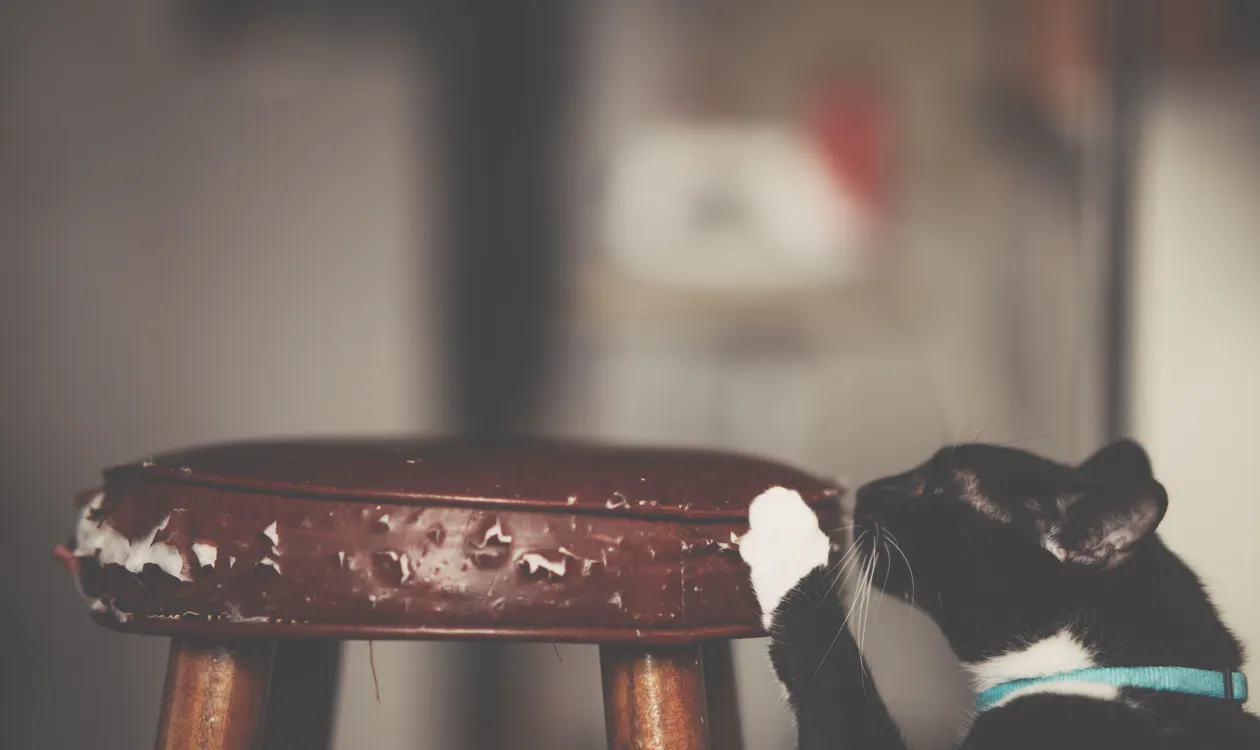
Cats scratch furniture because it is a natural, necessary behaviour, not bad manners. Scratching sharpens claws, stretches muscles, and marks territory through scent glands in the paws. The fix is never to stop the behaviour but to redirect it towards an appealing scratching post placed in the right spot, while making furniture less attractive to scratch.
Why Cats Scratch in the First Place
- Claw maintenance — scratching removes the worn outer layer of the claw, revealing a sharp new surface underneath
- Muscle stretching — scratching works the muscles in the front legs, shoulders and spine
- Scent marking — glands between the paw pads leave a pheromone signal, marking territory for other cats
- Stress relief — some cats scratch more when anxious, similar to a stress-relieving habit
Never punish a cat for scratching. This is a natural instinct, and punishment tends to increase stress and, ironically, more scratching.
Why Your Cat Chooses the Sofa Over a Scratching Post
Cats are picky about scratching surfaces for practical reasons, not spite. The most common mismatches are:
| Problem | What Your Cat Actually Wants |
|---|---|
| Post is wobbly or too short | A sturdy, tall post that will not tip or wobble under a full stretch |
| Post is in a quiet corner | A location near sleeping areas or entry and exit points, since cats often scratch after waking |
| Post material feels wrong | Sisal rope or corrugated cardboard tends to be preferred over soft carpet-covered posts |
| Only one option in a multi-cat home | Multiple posts in different rooms, since one post can create competition |
Step-by-Step: Redirecting the Behaviour
- Place a sturdy scratching post directly next to the furniture your cat currently scratches
- Make the post more appealing than the furniture with catnip, play, or treats placed near it
- Gradually move the post to your preferred location over several weeks, a short distance at a time
- Make the original furniture less appealing with a temporary deterrent such as a throw, double-sided tape, or a citrus-scented spray cats tend to dislike
- Praise and reward your cat whenever you see them using the post
When Scratching Suddenly Increases
A sudden rise in scratching, especially widespread scratching near doorways and windows, often signals stress rather than a claw-care need. Common triggers include a house move, a new pet, building work, or changes in the household. If you suspect stress, keeping routines consistent and considering a synthetic feline pheromone diffuser can help, alongside the wider settling-in advice in our guide to introducing a kitten to a cat. If scratching remains a problem, ask your vet for a referral to a feline behaviourist, and check our cat health care guide for wider signs of stress-related illness.
What About Trimming Claws?
Regular nail trims can reduce the damage caused by scratching, though they will not stop the behaviour itself, since scratching serves purposes beyond just claw maintenance. Older or less mobile cats may need more frequent trims, since they scratch less often naturally and claws can become overgrown. Never consider declawing, which has been illegal in the UK since 2006 due to the pain and long-term harm it causes.
Frequently Asked Questions
Why does my cat scratch right after I get a new sofa?
New furniture often has an appealing texture and no existing scent markings, making it an attractive target. Placing a scratching post nearby immediately, before a habit forms, helps prevent this.
Is it cruel to redirect my cat away from scratching furniture?
No, as long as you provide a genuinely appealing alternative rather than simply stopping the behaviour. Scratching is a necessary part of a cat’s physical and emotional wellbeing.
Will trimming my cat’s claws stop them scratching furniture?
Trimming reduces damage but will not stop the underlying instinct to scratch, since it also serves scent-marking and stretching purposes.
How do I know if my cat’s scratching is stress-related?
Widespread scratching, particularly near doorways and windows, combined with other changes in behaviour or a recent change at home, often points to stress rather than simple claw care.
Key Takeaways
- Scratching is a natural, necessary behaviour that should be redirected, not stopped
- Post sturdiness, material and placement all affect whether your cat uses it
- A sudden increase in scratching often signals stress, not a claw-care issue
- Declawing is illegal in the UK and never an appropriate solution
About the Author: This guide was written by the K9 Assistance editorial team, who research UK-based pet care topics to help owners make confident, informed decisions.