

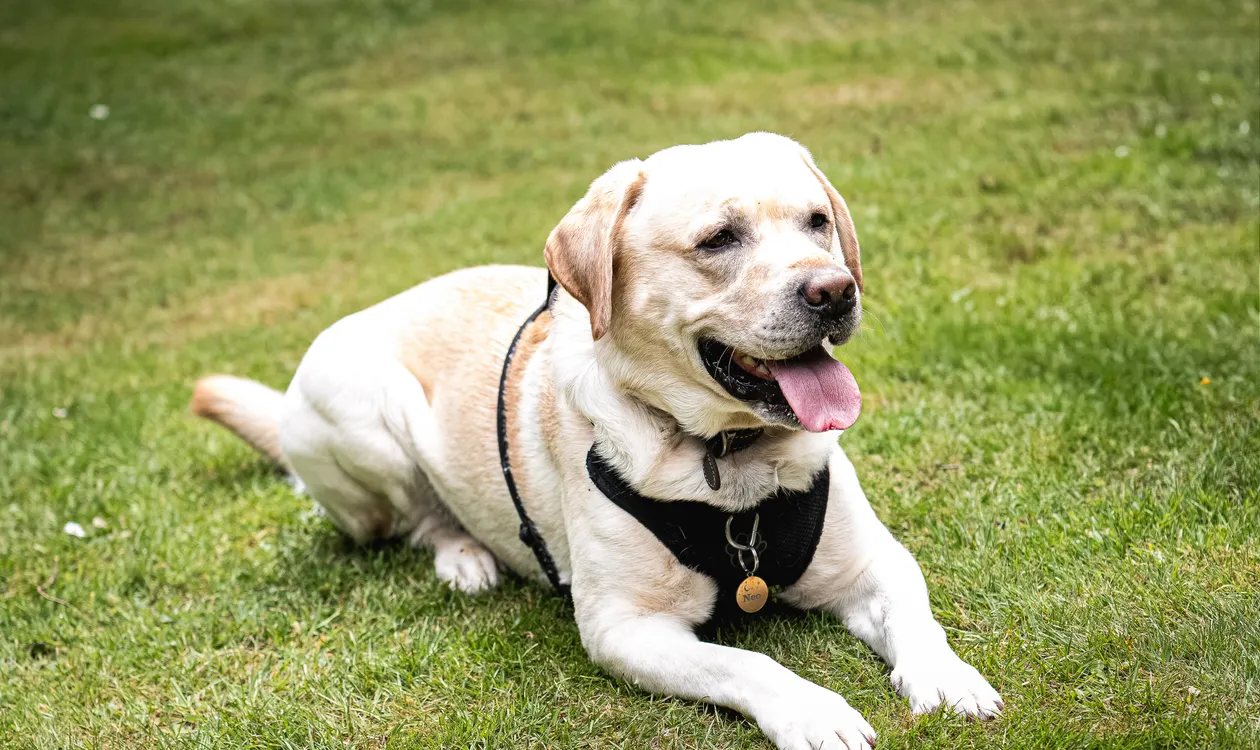
Hip dysplasia is one of the most common inherited joint problems in British dogs. It is not a disease a dog catches, and it is not caused by a single accident. The hip joint simply does not develop as it should while the puppy is growing, so the ball and socket fit loosely instead of snugly. That looseness wears the joint down over months and years, causes pain and leads to arthritis.
Most dogs with hip dysplasia can live comfortable, active lives with the right plan. Some need only weight control, sensible exercise and pain relief. A smaller number need surgery.
What Is Hip Dysplasia?
A healthy hip is a ball and socket joint. The head of the thigh bone sits deep inside the socket of the pelvis and moves smoothly. In a dog with hip dysplasia, the socket is too shallow, the ball is misshapen, or the ligaments are too loose. The joint wobbles with every step, damaging the cartilage and inflaming the joint lining until osteoarthritis sets in.
Genetics drive the condition. A puppy inherits the tendency from its parents, which is why screening breeding dogs matters so much.
Which Dogs Are Most at Risk?
Any dog can develop hip dysplasia, including crossbreeds and small breeds, but it is far more common in large and giant breeds. The breeds vets see most often are German Shepherds, Labrador Retrievers, Golden Retrievers, Rottweilers, Bernese Mountain Dogs and Newfoundlands.
The BVA/Kennel Club scheme publishes a breed median score, the hip score of the average dog in that breed. Published BVA figures put the median at 9 for Labrador Retrievers and 11 for both German Shepherd Dogs and Golden Retrievers. Breeders should choose stock with scores below the breed median. If you are buying a large-breed puppy, ask for the hip scores of both parents before you pay a deposit.
Signs of Hip Dysplasia in Dogs
The PDSA notes that symptoms usually begin while the dog is still growing, at around five to six months of age. Many dogs show nothing obvious until they are older and arthritis has set in.
Early signs in puppies and young dogs
Bunny hopping. Both back legs move together instead of alternating, like a rabbit.
Stiffness after rest. The puppy is slow and wobbly for the first few steps after a sleep, then loosens up.
Reluctance to jump or climb stairs, and a swaying walk, with the back end rolling side to side.
Less interest in walks and play. A young dog that used to charge around now lags behind.
Later signs in adult and older dogs
Limping on one or both back legs, often worse after exercise or in cold, damp weather.
Thin, weak back legs, as the hip and thigh muscles shrink from disuse.
Difficulty getting up or lying down, and pain when the hips are touched. Some dogs yelp or snap when the area is handled.
One sign on its own proves nothing, but a dog that bunny hops every day and stiffens after every sleep needs a vet visit. Our guide to treating joint pain in dogs covers the wider picture of sore joints.
How Vets Diagnose Hip Dysplasia
Diagnosis starts with a hands-on examination. Your vet watches your dog walk and trot, feels the hips for pain and looseness, and checks how far each leg moves.
X-rays confirm the diagnosis. The standard hip X-ray is taken with the dog on its back and its back legs extended, usually under sedation or a short general anaesthetic so the muscles are fully relaxed. A diagnostic hip X-ray typically costs £150 to £350 including sedation, depending on the size of the dog and where you live.
Understanding the BVA/Kennel Club Hip Score
For breeding dogs, X-rays can be sent to the BVA/Kennel Club Canine Health Schemes for official scoring. Two scrutineers assess nine features of each hip, scoring each from 0 to 6. Each hip can score 0 to 53, so the total ranges from 0 (perfect hips) to 106 (severely affected). Lower is better.
Treatment Without Surgery
Weight control
This is the single most effective thing you can do. Every extra kilo loads the damaged joint with every step. You should be able to feel your dog’s ribs easily and see a waist from above and from the side. Our guide on helping an overweight dog lose weight sets out a safe weekly plan.
Pain relief medication
Non-steroidal anti-inflammatory drugs (NSAIDs) such as meloxicam are the standard prescription for hip pain. They reduce inflammation inside the joint and most dogs improve noticeably within a few days. For a large dog, long-term NSAIDs typically cost £20 to £45 a month. Never give your dog human painkillers such as ibuprofen or paracetamol. Both are toxic to dogs.
Exercise: little and often
The rule is regular, gentle exercise and no sudden bursts. Two or three short lead walks a day suit most dysplastic dogs better than one long weekend hike. Avoid ball chasing, jumping and rough play, all of which load the hips suddenly. Dog enrichment ideas such as scent games and puzzle feeders keep a dog busy on days when walking has to be short.
Physiotherapy, hydrotherapy and supplements
A veterinary physiotherapist builds a programme of exercises that strengthen the muscles around the hip without stressing the joint. Hydrotherapy on an underwater treadmill does the same thing with the water taking some of the weight. In the UK, a hydrotherapy session typically costs £30 to £60, with an initial assessment at £45 to £90, and a physiotherapy session averages around £50. Hydrotherapy must be done on veterinary referral.
Surgery for Hip Dysplasia
Surgery is for dogs whose pain cannot be controlled with management, or for young dogs where an early operation can change how the joint develops.
| Operation | Best for | Typical UK cost per hip |
|---|---|---|
| Total hip replacement | Adult dogs with severe arthritis | £5,000 to £6,750 |
| Femoral head and neck excision (FHNE) | Smaller dogs, or where cost is a barrier | £1,000 to £2,500 |
| Double or triple pelvic osteotomy | Young dogs, before arthritis sets in | £2,000 to £4,000 |
Total hip replacement swaps the damaged joint for an artificial one and gives the best long-term result, but it is the most expensive option. UK specialists have quoted about £5,100 to £6,750 for one hip, and a dog needing both hips can face a bill over £10,000. Recovery takes 6 to 12 weeks of restricted exercise.
Daily Life, Home Care and Prevention
Small changes at home reduce the daily load on sore hips. Put non-slip rugs on wooden and tiled floors, because a dysplastic dog that slips can injure the joint badly. Add a ramp or steps for the car and sofa so the dog does not have to jump. Senior dog care covers many of the same adaptations, and most apply to a young dysplastic dog too.
You cannot change a dog’s genes, but you can reduce the risk. Keep the puppy lean, because a fat puppy grows too fast and loads its joints. Do not over-exercise a young large-breed dog: the common guidance is five minutes of lead walking per month of age, twice a day, so a four-month-old puppy gets about 20 minutes twice a day.
Insurance and Lifetime Costs
Hip dysplasia is expensive: a dog on daily NSAIDs, joint supplements and regular hydrotherapy can easily cost £60 to £100 a month. Take out lifetime cover before any symptoms appear, because once diagnosed it counts as a pre-existing condition and no new policy will cover it.
When to See a Vet Straight Away
Book a routine appointment if your dog shows any of the signs above for more than a few days. Seek urgent care the same day if your dog cannot bear weight on a back leg, cries out when moving, collapses, or suddenly refuses to get up.
Frequently Asked Questions
Can a dog with hip dysplasia live a normal life?
Yes, in most cases. Dogs with mild to moderate dysplasia live full, happy lives with weight control, pain relief and sensible exercise, and most surgical cases return to comfortable walking after recovery.
How much does hip dysplasia surgery cost in the UK?
A total hip replacement costs roughly £5,000 to £6,750 per hip at a specialist practice. Femoral head excision costs £1,000 to £2,500 per hip. Dogs needing both hips can face bills over £10,000.
What is a good hip score for a dog?
Under the BVA/Kennel Club scheme the total runs from 0 (perfect) to 106 (severely affected), and lower is better. Breeders should choose stock below the breed median: 9 for Labrador Retrievers and 11 for German Shepherd Dogs and Golden Retrievers.
The Bottom Line
Hip dysplasia is common, inherited and progressive, but it is not a sentence. Watch for bunny hopping, stiffness after rest and reluctance to jump, especially in a large-breed puppy. Get X-rays early, keep your dog lean, use the pain relief your vet prescribes, and build the muscles around the joint with gentle, regular exercise and hydrotherapy.
Related reading
Pets at Home Grooming: Prices & Reviews – k9assistance
Positive Dog Training Tips for Home Use – k9assistance
The Truth About the Worst Dog Food Brands – k9assistance
Why Dental Caries Are Rare in Dogs – k9assistance