

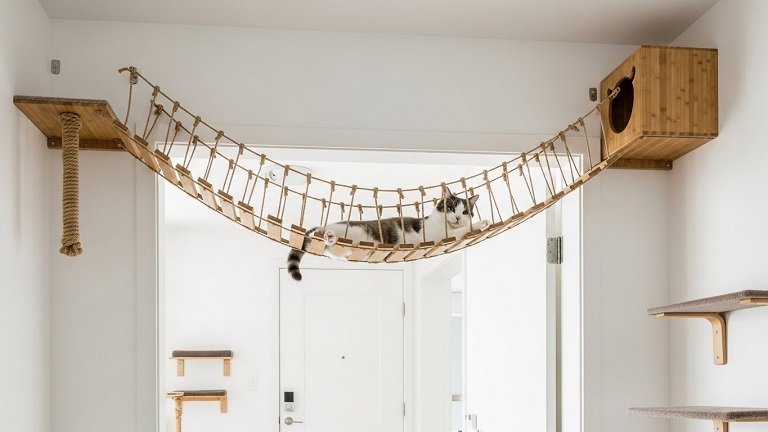
A cat wall bridge is a raised walkway that connects two shelves or platforms, giving cats a safe elevated route across a room, doorway or window. Made well, they combine exercise, territory and a good vantage point, which most cats find genuinely appealing. This guide covers what to look for, how they are typically built, and how to fit one safely in a UK home.
Why Cats Enjoy Elevated Bridges
Cats are natural climbers who feel more secure with height and a clear view of their surroundings. A wall-mounted bridge gives them a safe way to patrol a room from above, rest somewhere quiet, and get extra exercise without needing floor space. It is a particularly good option for flats or smaller homes where floor-standing cat trees take up too much room.
What to Look for When Choosing a Cat Bridge
Materials and Build Quality
Sturdy hardwood or bamboo frames with securely fixed slats tend to hold up best over time. Check the manufacturer’s stated weight limit, especially in multi-cat households, and look for rope or fabric railings that are chew-resistant rather than thin twine, which some cats will happily unpick.
Length and Placement
Measure the gap you want to bridge before ordering, and check the required stud spacing for secure wall mounting. Bridges that span doorways or windows tend to get the most use, since cats enjoy watching both indoor and outdoor activity from a height.
Safety Considerations
- Always mount into wall studs or use appropriate fixings for your wall type, not just plasterboard alone
- Check weight ratings match your cat’s size, particularly for multi-cat households
- Inspect ropes and joints periodically for wear, especially if your cat chews
- Introduce the bridge gradually rather than assuming your cat will use it immediately
Benefits of Adding a Cat Bridge to Your Home
- Uses vertical space — ideal for flats and smaller homes where floor space is limited
- Supports natural behaviour — climbing and surveying territory from height reduces stress in many cats
- Adds enrichment — a change of scenery and route through the home keeps cats mentally engaged
- Multi-cat friendly — a well-built, wide bridge gives cats a shared route without forcing close contact on the ground
If your cat seems restless or under-stimulated generally, a bridge is one option among several. Our guide to enrichment activities (many principles apply to cats too) covers other ways to keep an indoor cat engaged.
Installing a Cat Bridge Safely
Locate your wall studs first, since securing into solid wood or masonry rather than plasterboard alone is essential for weight-bearing furniture. Most bridges mount between two end platforms or shelves, so plan the full layout, including where your cat will land and take off, before drilling. If you are unsure about wall type or fixings, a professional installer or handyman is a worthwhile investment for a piece your cat will use daily.
Frequently Asked Questions
Are cat bridges safe for kittens?
Introduce height gradually and supervise a kitten’s first few uses. Many owners wait until a kitten is a little older and more coordinated before allowing full access to elevated furniture.
How much weight can a cat bridge hold?
This varies by product and construction, so always check the manufacturer’s stated weight limit, particularly if you have more than one cat who might use the bridge at the same time.
Will my cat actually use a wall bridge?
Most cats take to elevated furniture readily, especially near a window, but placement and a gradual introduction (using treats or play to encourage first use) make a real difference.
Key Takeaways
- Choose sturdy materials and check weight ratings before buying
- Mount securely into wall studs, not plasterboard alone
- Placement near a window or doorway tends to get the most use
- Introduce gradually rather than expecting immediate use
About the Author: This guide was written by the K9 Assistance editorial team, who research UK-based pet care topics to help owners make confident, informed decisions.