

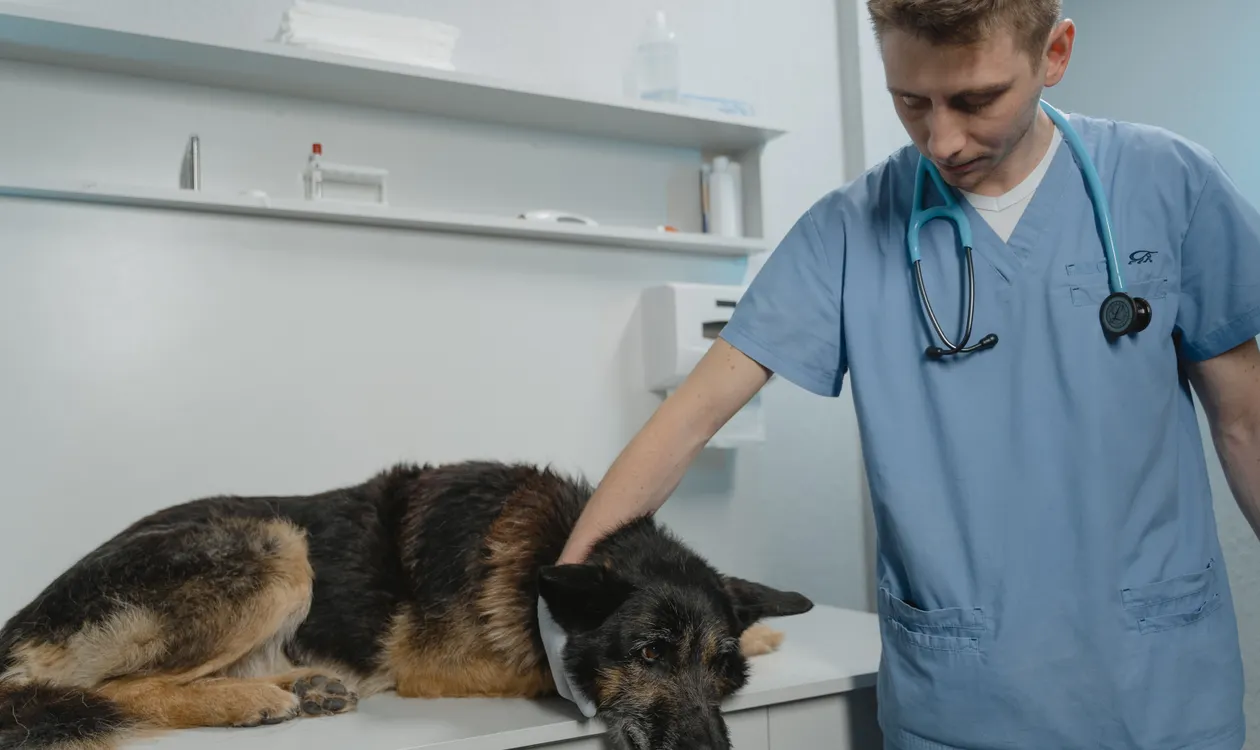
A dog that suddenly starts vomiting, refuses dinner and hunches in pain has an owner who wants answers fast. Pancreatitis can cause exactly that picture, from a mild upset that settles in days to a serious illness needing hospital care. This guide covers what it is, how to spot it, what your vet will do, what it costs, and how to feed your dog afterwards.
What Is Pancreatitis in Dogs?
The pancreas is a small organ next to the stomach. It makes enzymes that help digest food, and insulin, which controls blood sugar. In pancreatitis it becomes inflamed, and the digestive enzymes switch on too early, inside the pancreas, damaging it instead of digesting food.
That damage causes the pain, sickness and loss of appetite. The PDSA describes it as ranging from mild to very severe. It can affect any breed, but it is very common in Miniature Schnauzers. There is no single tablet that switches the inflammation off, so treatment is supportive: your vet manages pain, sickness and dehydration while the pancreas heals. Most dogs recover, but severe cases can be life threatening, so early treatment matters.
Acute Pancreatitis vs Chronic Pancreatitis
Acute pancreatitis comes on suddenly. A dog that was fine yesterday is vomiting, off its food and clearly sore today. This is the form most owners meet, and in severe cases it can be dangerous.
Chronic pancreatitis is a long term, low grade problem. It grumbles along, with periods where the dog seems “just not quite right” and flare ups that look like acute episodes. Over time it can permanently damage the pancreas, leading to exocrine pancreatic insufficiency (EPI) or diabetes. Some dogs have one acute episode and never have another. Others need a different diet and closer monitoring for life.
Symptoms of Pancreatitis in Dogs
According to the PDSA, the most common signs are repeated vomiting, eating less or refusing food, a painful tummy, diarrhoea, lethargy and weight loss. A fever can also appear, or in severe cases a drop in body temperature.
Vomiting on its own does not mean pancreatitis: plenty of dogs are sick after eating something odd and recover within a day. Our guide to why dogs are sick and what vomit colour means explains the common causes. The pattern to worry about is vomiting combined with tummy pain and a dog that will not eat. Diarrhoea alongside it points the same way, and our dog diarrhoea guide covers when loose stools need a vet.
The Prayer Position and Other Early Signs
One sign vets and owners both watch for is the “prayer position”: a dog with a sore abdomen stretches its front end down while keeping its back end up, like a bow, to take pressure off the painful belly.
Earlier signs are easy to miss: a dog may turn its nose up at breakfast, eat slowly, lick its lips, gulp or drool more than normal. These are classic signs of nausea. A dog may also hide away or seem restless and unable to settle. If your normally food mad dog walks away from dinner and looks uncomfortable, take it seriously.
What Causes Pancreatitis in Dogs?
Vets often never find a single clear cause. The Kennel Club says the cause is often unknown, but a large amount of high fat food in one sitting is a common trigger, which is why cases spike after Christmas, barbecues and birthdays.
The risk factors the PDSA lists include being overweight, recently eating high fat foods such as pork, cheese or butter, being unwell with another illness, and recent surgery. Table scraps and rubbish are also named as common risk factors: vets often see cases after a dog has raided a bin or been given a fatty bone or a plate of leftovers. It is the sudden load of fat that overwhelms the pancreas, not one ordinary meal.
Which Dogs Are Most at Risk?
Any dog can develop pancreatitis, but some breeds are more prone. The PDSA says it is very common in Miniature Schnauzers, linked to naturally high blood fat levels in the breed. The Kennel Club also lists Cavalier King Charles Spaniels, Boxers, Border Collies, Cocker Spaniels, terriers and other small breeds as possibly at higher risk.
Middle aged and older dogs are seen more often, and overweight dogs carry a higher risk. If your dog is carrying extra pounds, our guide to helping an overweight dog lose weight sets out a safe, step by step approach.
How Vets Diagnose Pancreatitis
Your vet will start with a full examination and questions about recent food, when symptoms started and whether this has happened before. Because the symptoms overlap with many other stomach problems, tests are usually needed to confirm it.
The PDSA says tests may include blood tests, X-rays and an ultrasound scan. The key blood test is the Spec cPL (canine pancreas-specific lipase) test, which measures an enzyme that rises when the pancreas is inflamed. An ultrasound lets the vet look at the pancreas and check for swelling, while X-rays mainly rule out other causes, such as a swallowed object or a blockage. Mild cases can be hard to pin down because the signs are vague, so diagnosis is not always instant.
Treatment: What Happens at the Vet
There is no specific cure for pancreatitis, so treatment aims to support the dog while the inflammation settles. Mild cases usually get anti-sickness medicine, strong pain relief, rest, and small, low fat meals through the day, sometimes managed at home with check ups.
Severe cases usually mean a few days in hospital: a drip for lifesaving fluids, nursing care, injectable pain relief and anti-sickness medicine, and careful feeding. A feeding tube is sometimes needed, and the worst cases need intensive care with round the clock monitoring.
Feeding advice has changed in recent years. Vets used to “starve” dogs with pancreatitis for several days to rest the pancreas. That is no longer the standard approach: early, gentle nutritional support is now preferred, because keeping the gut working helps recovery. Most dogs with mild to moderate pancreatitis recover within a few days to a couple of weeks. Severe cases take longer, and a small number do not survive despite intensive care, which is why fast treatment matters.
How Much Does Pancreatitis Treatment Cost in the UK?
Costs vary with how ill the dog is, how many nights it spends in hospital, and where you live. London and other large cities tend to be dearer, and larger dogs cost more because they need higher doses.
Bluebell Veterinary Surgery in Southampton published these UK ranges in 2026, based on guidance from veterinary charities and insurers. They are estimates, not quotes:
| Severity | Typical care | Estimated UK cost |
|---|---|---|
| Mild, outpatient | Consultation, blood tests incl. Spec cPL, anti-sickness injection, pain relief, oral medicine, recovery food | £250 to £600 |
| Moderate, short hospital stay | Bloods, ultrasound, 1 to 3 days of IV fluids, injectable pain relief, nursing care | £800 to £2,000 |
| Severe, intensive care | 4+ days in hospital, round the clock monitoring, repeat tests and scans, feeding tube if needed | £2,500 to £5,000 or more |
ManyPets, a UK pet insurer, puts it more simply: treatment can run to hundreds of pounds, if not more. Always ask your vet for a written estimate first, and check what your insurance covers. A previous episode may count as a pre-existing condition on a new policy.
Feeding a Dog After Pancreatitis
Food is the part of recovery owners control, and it matters as much as the medicine. The PDSA advises a prescription diet from your vet, because shop bought low fat foods may still contain too much fat.
Feed small, low fat meals several times a day rather than one or two large ones. Return to normal food gradually over a week or so, only when your vet agrees. Give no table scraps, fatty treats, pork, cheese, butter or rich leftovers, even as a one off, and ask your vet before changing foods or adding supplements.
For chronic pancreatitis, a low fat diet is usually for life, and it can also lead to diabetes, so tell your vet if your dog starts drinking and weeing much more than usual. Our guide to custom diet plans for diabetic and health conscious dogs explains how vets tailor feeding when diabetes is part of the picture.
Recovery at Home: What to Expect
Once your dog is home, expect a quiet few days: most are tired and sore for 48 hours or so after a mild episode. Give them a warm place to rest, keep walks short and on the lead, and do not rush back to normal exercise or rich food.
Keep a note of what your dog eats, whether it keeps food down, and its energy levels: useful facts if you phone the vet. If vomiting starts again, or your dog refuses food for more than a day after discharge, call the practice rather than waiting. Recovery from a severe episode is slower, often two to four weeks, and your vet may book repeat blood tests to check the pancreas has settled.
How to Prevent Pancreatitis
You cannot remove the risk completely, but you can cut it sharply. Keep your dog at a healthy weight with measured meals and regular exercise. Feed a consistent, good quality diet and avoid sudden changes or rich foods. Never give fatty table scraps, cooked bones with marrow, or roast and takeaway leftovers. Secure bins and keep food out of reach, especially around Christmas and barbecues. If your dog has had pancreatitis before, stick to the low fat diet your vet recommended. The single most effective step is also the simplest: no fatty human food.
When to Call the Vet Straight Away
Book a vet appointment as soon as possible if your dog shows these symptoms, especially if it has had pancreatitis before. Do not wait to see if it improves: the Kennel Club and the PDSA both warn against that.
Treat it as an emergency and call your vet or an out of hours practice immediately if your dog cannot keep water down or has vomited repeatedly for hours; collapses or is very weak; has pale gums, a swollen or painful belly, or bloody vomit or diarrhoea; or is in obvious distress.
Pancreatitis can be frightening, but vets see it every week, and most dogs that get prompt treatment recover well. Knowing the signs, acting fast and keeping fatty food off the menu make the biggest difference.
Related reading
- Why Dental Caries Are Rare In Dogs
- Kennel Cough Dogs Guide
- Dog Dental Care Guide
- Dog Allergies Symptoms Treatment